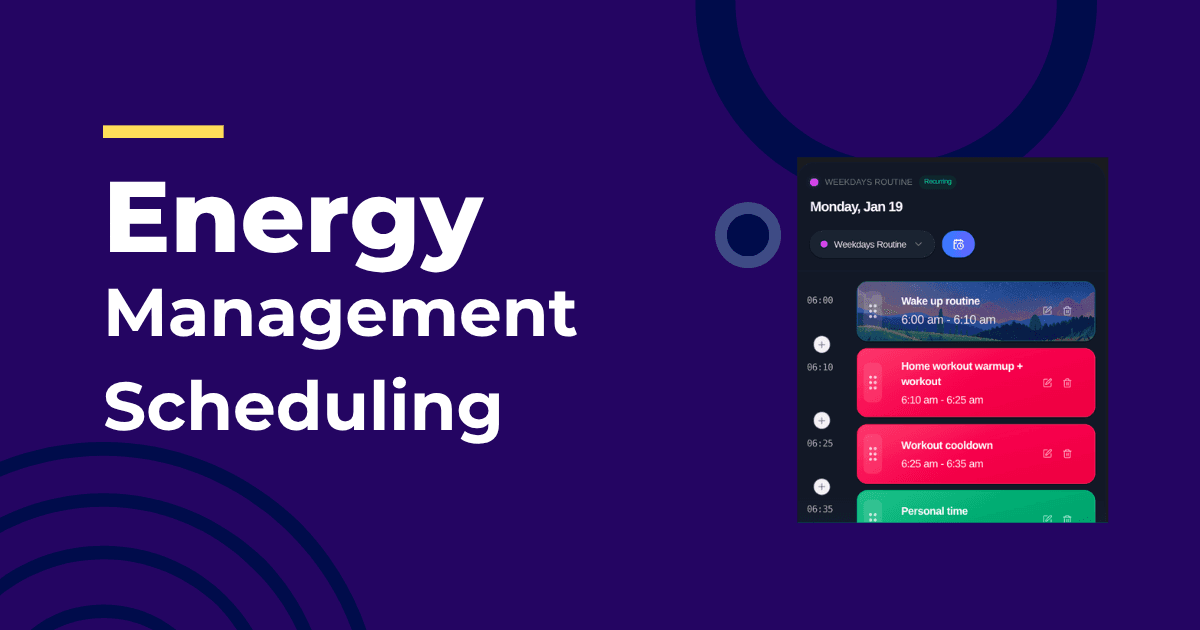
You don’t have the same brain all day. The trick isn’t more willpower — it’s matching the work to the energy you actually have.
Map Your Energy Curve
Track 7 days:
- Morning: alert, steady, low?
- Midday: slump or stable?
- Afternoon: second wind or done?
- Evening: creative or foggy?
You’ll see a pattern. Most people have two peaks and a midday dip.
Assign Work to Energy
- Peaks: deep work, writing, design, complex decisions
- Dips: admin, email, shallow collaboration
- Variable: meetings you must attend
Let AI Protect It
- Two daily deep work windows land on your peaks
- Admin fills dips
- Meetings slot around boundaries
- When the day slips, the system keeps the pattern by moving blocks to the next best match
This is standard in IntelliRoutine. For structure options, see Timeboxing vs Time Blocking and Deep Work Schedule Template.
Frequently Asked Questions
What if my energy is unpredictable?
Use guardrails, not rules. Protect typical peaks, but let the planner move blocks when reality or energy changes.
How do I handle late-night creativity?
Keep a small optional evening slot. If it triggers burnout, the planner should preserve sleep by shifting tomorrow’s load.
Does this work with a meeting-heavy job?
Yes. Even one 60-minute protected peak window improves output. Group meetings mid-day and defend your peak.
About the Author
Profazia builds adaptive scheduling at IntelliRoutine. If you want your plan to respect your battery, try it free.